Understanding Regionalisation: Key Answers for Members
from the President’s meeting on 22 November 2025
REGIONALISATION ANSWERS – from President’s meeting on 22 November 2025
WHY AND HOW
Why are we doing the regionalisation pilot?
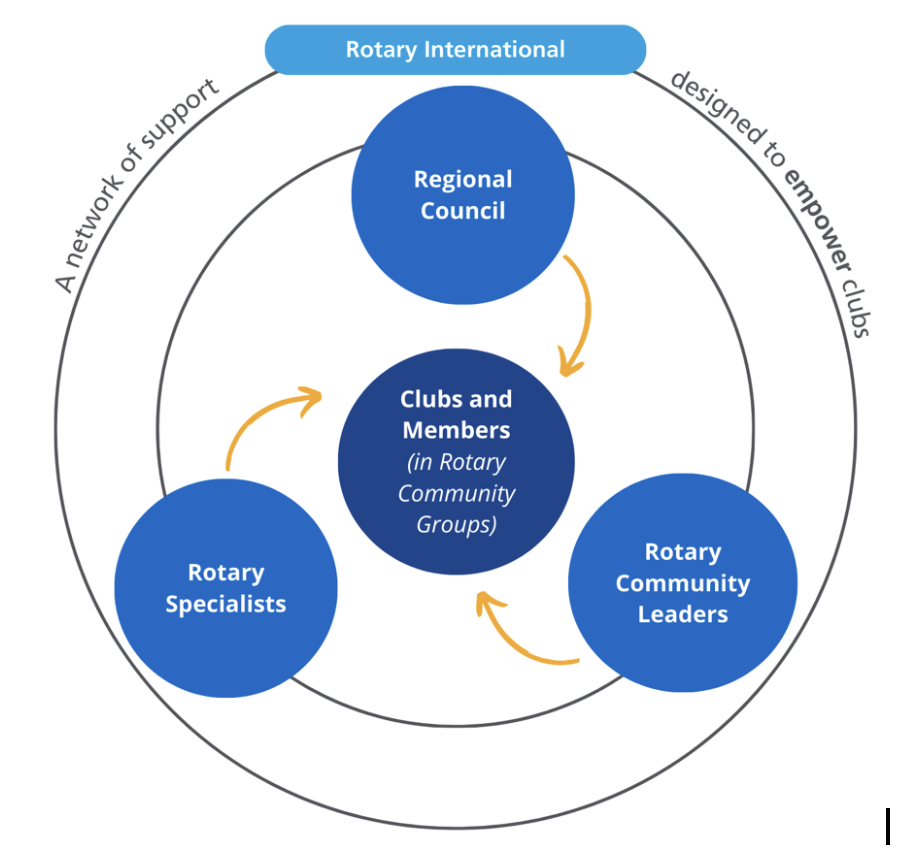
The governance and support structures developed so far aim to support clubs and members. Rotary is a “bottom up” organisation, not a “top down” one.
What is the benefit to clubs? How does this pilot impact us as members at the club level?
There have been great opportunities for clubs so far, if they choose to take advantage of them. These include:
The Fit for Purpose club revitalisation program – even if your club did not take part initially, the Transformation Workshop resources are available to use. https://rotarysouthpacific.org/sitepage/membership
The Specialist Hub – does your club or one of your members need help with something? Have burning questions to ask? Want advice and support on a project, membership or public image idea? Feel weird asking your local expert? The Specialist Hub provides access to expertise across a huge range of areas, from right across our zone. https://zone8specialisthub.au/
- Centralised public image campaigns, leveraging national media and significant expertise in shaping and advertising our Rotary stories. Submit your project to the regional Public Image team, or share their hard work on your own club's social media to help tell the story of how great Rotary is! There are also resources to help your club write better stories and engage with your local media. https://rotarysouthpacific.org/sitepage/public-image
What do the outcomes look like?
First and foremost, we want to see a reversal in the ongoing decline in membership numbers across the zone. It doesn’t need to be an increase (although how good would that be!), but at least our membership stops dropping.
We also want to see better coordination of Rotary’s efforts at the state, national, and zone levels. By using a regional governance structure, we can develop larger projects and opportunities for clubs to tap into, thereby increasing our impact. We have seen this already with the Domestic Violence campaign and, on a broader level, with the way Rotary has literally changed the world through End Polio Now. When we work together and have the governance structures to support that, Rotarians can have an even bigger impact on the world.
Why is membership falling in our zone and increasing in other places? What can we learn from successful countries?
This is a complicated question to answer and draws on culture, history, geography, and many other factors we’re not in a position to change. Learnings from the increase in Rotary numbers in Taiwan, for example, are not necessarily applicable in Australia as we have a very different population density, culture and stage in our economic and social history from Taiwan.
However, what we can learn is that Rotary thrives when Rotarians work together rather than in silos, where Rotarians lean in and speak positively about the organisation to others, and where we actively invite others to get involved and make the world a better place.
How can we give our feedback on the pilot initiatives?
Informed feedback is very welcome! Talk to your Rotary Community Leader at first instance, and they’ll point you in the right direction to help your voice be heard.
RCGs
What is the purpose of the Rotary Community Groups? What will be achieved, and how will these help clubs collaborate better?
The Rotary Community Groups are designed to be more people-sized collections of Rotary clubs, gathered around a shared cause, interest, or geographical area, to collaborate and increase Rotary's impact on our communities. Think of them like mini-districts, with the intentional aim of bringing neighbouring clubs together to share resources and ideas, and grow bigger projects that can change more lives.
IMPACT ON PROJECTS
What opportunities/programs are available to improve joint projects?
Use the Specialist Hub for external advice and support, and lean into the collective resources (time, talent and treasure) of the clubs in your community group to improve joint projects. If you’re not sure where to start, reach out to the District Team, and they’ll point you in the right direction.
There are also a number of zone-wide projects that your club and community group can choose to participate in, such as the Falls Prevention Alliance, the ongoing Domestic Violence campaign, the Epic Day of Service – see the Service Projects page on the Rotary South Pacific Website for more ideas and information: https://rotarysouthpacific.org/sitepage/service-projects-and-programs
What’s going to be achieved? Well, that’s up to you! Your Community Leader is there to facilitate connections and conversations. District supports and advice are also available. No amount of resources and opportunities is enough when clubs and members choose not to lean in.
IMPACT ON MEMBERSHIP
What is the optimal size of a club?
There is no optimal size for a club – it depends on your geographical location, culture, meeting style, and who your members are.
Keep in mind that the minimum club size to charter is 20 members; this gives a guideline for a good starting point for a new club in terms of membership, with the expectation that it will grow.
How will the pilot initiatives increase membership?
By building public knowledge of Rotary and the opportunities it offers for people who want to do good in the world, and by intentionally considering how our clubs function in ways that are inviting and encouraging to new members, the pilot initiatives provide clubs with an opportunity to increase their membership. It’s up to your club to engage and lean in to get the most out of it, as well as engage with the membership leads that are already coming in.
Collaboration between clubs and explicit work to build connecting communities should also reduce the work of Rotary for individual clubs and members, thereby making it all much more fun and inviting to be a part of.
The pilot’s initiatives are the wrong way to approach falling membership – why not more encouragement of the young at their level?
The pilot is also encouraging young people to get involved in Rotary – but which club will they join? If your club wants to re-imagine itself as a Rotary home for young people, then go for it. Change only happens when we invite it in.
How do we do it better when it comes to club members?
Fight the negativity! We all like a good whinge, and our club members are our friends and colleagues. Just think about who else is watching and listening when we roll our eyes and complain about all things Rotary – remember, from the outside Rotary is all one entity.
What might younger members / potential members want or expect?
What a great question to take out into your local community! Use the Fit for Purpose resources (linked above) to take a good, hard look at your club – think about what is exclusive vs. inclusive, and what is welcoming vs. excluding. What are the low walls and the high walls you (maybe unconsciously) expect new members to climb over?
There’s no blanket answer, as people are all different. There’s a balance to be found between maintaining the things that are important to your current club members and changing things up to increase how welcoming and inviting your club is to potential new members, regardless of age.
RESOURCES
What kinds of support are available for clubs in the specialist hub?
You can find an expert in pretty much anything in the Specialist Hub. The Specialists are clustered into 7 main topic areas: Membership, Public Image, Service Projects, Funding & Grants, Learning & Development, DEI, and Club Operations.
Need help managing an international project? Contact Tim Mee from 9510. Want advice on membership retention and wellbeing? Call Gray Crawford from District 9999 in New Zealand. Looking for ideas on increasing your club's fundraising? Try Lucy Anastasiadou-Hobbs from District 9910 in New Zealand.
I encourage you to get in there and have a look!
How much support is there at the ground (club) level to do this? What help can clubs get?
Your RCL is a great place to start, and the District Team is here for you as well. Engage with the Specialist Hub, check out the website, and lean on each other. There’s lots of support available, but it relies on you reaching out.
MEMBER COMMUNICATION/RELUCTANCE
How can we convince clubs to inform members to buy into changes and benefits? Given that individuals don’t read things, how do we embrace it?
We are very open to your ideas on how to communicate with members. The key message is that we have an opportunity to try things to make the way we do Rotary even better. It’s up to all of us to take advantage of that opportunity. There is so much communication out there on the website, social media, District newsletters, the Rotary South Pacific newsletter, RDU and more – anyone who is not informed at this stage seems to be choosing not to be informed.
How can we get long-term members who are attached to “old ways and traditions” and refuse to let go of traditions to make way for blue-sky thinking to see the opportunities for change?
Change can be tough, especially for long-term members who are comfortable with the way things are done. Change can feel like a personal attack on them, especially if personal identity includes Rotary as a set of activities rather than just a way of life. Sometimes change just isn’t possible for some people, and that can also be difficult to watch and feel like you can’t do anything to move forward.
This is an opportunity to think about how the playing field can be expanded, maybe with new models of Rotary – can you start a satellite club focused on blue-sky thinking to help encourage more locals into Rotary?
How can we get members to take on board positions? – all have done it so many times.
- Use the excuse of the pilot to rethink your Board structure!
- Do you need to have a director in all avenues of service?
- Do you need to have things ordered in a certain way?
- The pilot permits us to rethink how we do Rotary (make sure you also adjust your by-laws to match!).